
Loading...
Serving Kendall, FL and surrounding areas. (786) 840-4946
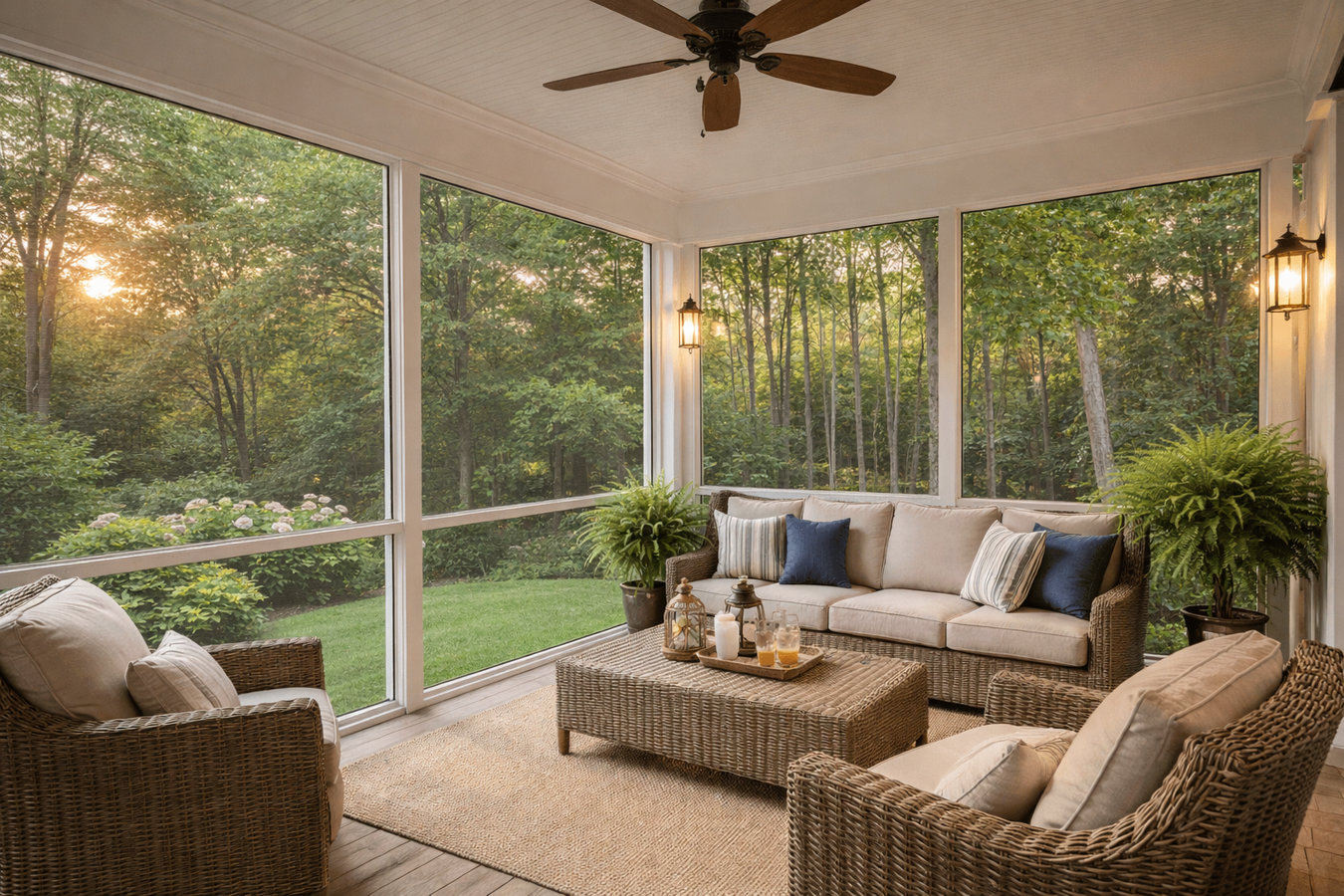
BlueStreet Kendall Sunrooms & Patios installs screen rooms, patio enclosures, and sunrooms throughout Fountainebleau, FL. We handle sunroom additions, four-season rooms, and custom designs - fully permitted through Miami-Dade County and built to hurricane standards. We reply within one business day.
Fountainebleau's flat terrain and drainage canals create standing water after summer storms, and that means mosquito and no-see-um pressure that lasts for months. A properly sealed screen room with no-see-um mesh is the most practical permanent fix for homeowners who want to use their outdoor space - far more reliable than sprays or portable traps that need constant attention. Learn about screen room installation.
Many homes in Fountainebleau have rear patios on concrete slabs that were poured decades ago and are structurally sound. Enclosing that existing slab turns months of rain-season downtime into usable protected space - and working off an existing slab keeps costs lower than starting from scratch.
The humidity and heat in Fountainebleau from May through October make an uninsulated enclosure genuinely uncomfortable for much of the year. A four-season room with insulated glass and a direct tie to the home's HVAC system solves that problem and makes the space usable even on the hottest, most humid days this neighborhood sees.
Homes in Fountainebleau tend to run on the smaller side - most were built as modest ranch-style houses during the postwar boom. A properly designed sunroom addition adds real square footage and expands what the home can do, which matters as property values in western Miami-Dade have climbed significantly in recent years.
For Fountainebleau homeowners who want shade and rain protection without committing to a full enclosure, a hurricane-rated aluminum or insulated panel cover is a practical starting point. Every cover we install meets Miami-Dade County wind-load requirements - the most demanding residential wind standards in the continental United States.
Lots in Fountainebleau vary in shape and depth, and older homes often have pool equipment, drainage systems, or utility lines that affect where an addition can go. A custom design built around your specific property avoids conflicts and produces a structure that actually fits rather than one adapted from a standard plan.
The homes in Fountainebleau were built primarily between the 1950s and the 1980s using concrete block construction - the standard building method in South Florida during the postwar growth decades. These CBS homes have held up well in most respects, but at 40 to 70 years old, any original screened porch or patio cover was built to construction standards that Miami-Dade County has since revised significantly. Today, any replacement or new addition must meet the county's current hurricane wind-load requirements, which are more demanding than what applied when those original structures went up. A contractor who does not stay current on Miami-Dade County code will cost you time in failed inspections and money in revisions.
Fountainebleau is unincorporated Miami-Dade County, which means there is no city hall and no local permit office - everything runs through the county. That matters for homeowners planning any addition, because the county's permit process involves review by the Miami-Dade County Building Department, stamped engineering drawings, and multiple on-site inspections. The neighborhood also sits on flat terrain with limited natural drainage, so enclosures and slab additions need to be designed with water management in mind - especially given the heavy summer rain that arrives almost daily from May through October.
Our crew works throughout Fountainebleau regularly, and we understand the local conditions that affect sunroom and enclosure work here. The neighborhood is made up almost entirely of concrete block homes from the postwar era, and the lots tend to be modest in size - typically under 7,500 square feet - with concrete driveways, small front yards, and fenced backyards. Most of the homeowners we meet here are long-term residents who have been in the same house for 20 or more years and want work done right, not fast.
The community sits just west of the City of Miami, with Calle Ocho (SW 8th Street) running along the northern edge and residential streets spreading south from there. Fontainebleau Park - a Miami-Dade County park with athletic fields and picnic areas - sits within the neighborhood and is a familiar landmark for residents. The surrounding streets are a grid of established blocks with mature trees and older homes that require a contractor who knows how to work on property that has some age to it.
We also serve homeowners in neighboring Doral to the northwest, where a newer housing stock and gated communities create a different set of project requirements. Homeowners in Westchester to the east will also find that we work across that community, which shares much of Fountainebleau's building stock and climate conditions.
Contact us by phone or through the form and we will schedule an on-site visit. We reply within one business day and do not give quotes over the phone - we need to see the space and the existing slab to give you an accurate number.
We visit your Fountainebleau home, assess the existing slab or footprint, review drainage patterns around the structure, and discuss how you plan to use the space. Your written estimate covers materials, labor, permit fees, and a realistic timeline - no number that changes after you sign.
We handle the full permit application to Miami-Dade County Building Department, including all required engineering documents. County review typically takes two to four weeks, and we track the application and keep you informed throughout.
Once permits are approved, the crew handles all phases from framing through finish. County inspectors review the project at required checkpoints, and we are on-site for every one. You receive full permit documentation at completion.
We serve homeowners throughout Fountainebleau and handle everything from permits to construction. No hidden costs. Contact us and we will respond within one business day.
(786) 840-4946Fountainebleau is a census-designated place in unincorporated Miami-Dade County, located just west of the City of Miami. With a population of roughly 59,000 to 60,000 people in a relatively compact area, it is one of the more densely populated CDPs in the county. The neighborhood has no city government - all public services including building permits, code enforcement, and public works are administered by Miami-Dade County. The community has deep Cuban-American roots going back to the 1960s and 1970s, and it remains one of the most established Latin American communities in western Miami-Dade. Most of the residential streets consist of single-family concrete block homes built between the 1950s and the 1980s, mixed with apartment buildings and small commercial strips.
The neighborhood is named in reference to the Fontainebleau area of Miami Beach history, and the local identity is closely tied to neighboring Westchester to the east - the two communities are often mentioned together as established, family-oriented western Miami-Dade neighborhoods. Fontainebleau Park, a Miami-Dade County park with athletic fields and green space, sits within the community and is a familiar gathering point for local families. Calle Ocho (SW 8th Street) runs along the northern edge of the neighborhood and connects Fountainebleau to the broader Cuban-American commercial corridor that stretches through Little Havana toward downtown Miami. Residents of neighboring Doral to the northwest live in a very different environment - newer construction, gated communities, and higher incomes - but both communities sit in western Miami-Dade and share the same county permit process.
Every project we complete in Fountainebleau is fully permitted through Miami-Dade County Building Department. We file the application, submit the engineering documents, and attend every scheduled inspection. The permit record follows your property and protects your investment at resale.
Miami-Dade County Building DepartmentMost homes in Fountainebleau are concrete block structures from the 1950s through the 1980s. We know how to attach new framing to CBS walls correctly, how to address stucco at the tie-in point, and what to look for at the slab edge before framing starts. Contractors who mostly work on newer construction miss details that matter on these older homes.
We install no-see-um mesh as standard on screen rooms in Fountainebleau rather than offering it as an upgrade. The insect pressure in western Miami-Dade is real year-round, not just in summer, and standard fiberglass screen does not block the smallest insects. A sealed perimeter and correctly tensioned panels make the difference between a screen room that works and one that lets bugs in anyway.
Miami-Dade County enforces the most stringent wind-load requirements for residential construction in the continental United States. Every framing member, fastener, and glass panel we install meets those requirements. When storm season arrives, your enclosure is not a liability.
Every project we complete in Fountainebleau is permitted, hurricane-rated, and built to handle the specific challenges of this neighborhood - the older housing stock, the flat terrain, and the year-round South Florida heat and humidity. That combination of local knowledge and code compliance is what keeps Fountainebleau homeowners coming back.
Convert your patio into a fully enclosed, weather-protected room.
Learn MoreTurn an underused deck into a comfortable year-round living area.
Learn MoreCall us now or send a message - we will schedule a free on-site estimate and most Fountainebleau homeowners hear back from us within one business day.