
Loading...
Serving Kendall, FL and surrounding areas. (786) 840-4946
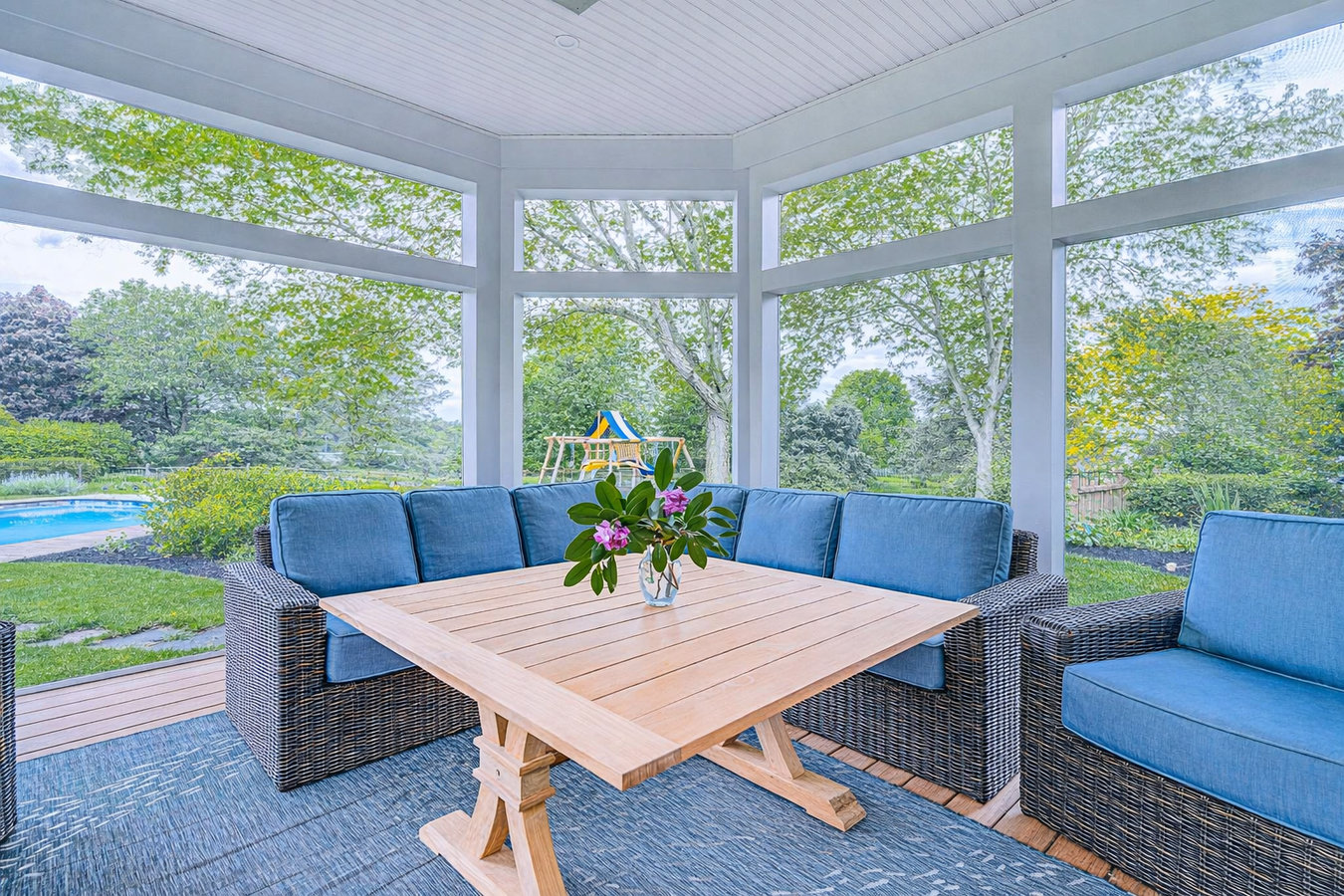
BlueStreet Kendall Sunrooms & Patios installs sunroom additions, screen rooms, patio enclosures, and custom sunrooms throughout Miami, FL. We handle Miami-Dade County permitting, wind-load compliance, and all inspections - and we have worked on the concrete block homes that fill Miami's residential neighborhoods for years. We reply to every inquiry within one business day.
Miami homeowners in neighborhoods like Westchester, Flagami, and Coral Terrace regularly add sunrooms to their concrete block homes to create climate-controlled living space without a full room addition. A sunroom addition on a CBS home ties into the existing exterior wall and slab, which keeps costs lower than building on bare ground. See how we approach sunroom additions in South Florida.
Miami's year-round warm temperatures make outdoor living appealing on almost any evening - but mosquitoes, no-see-ums, and afternoon rain make an open patio uncomfortable for a large part of the year. A screen room lets you stay outside on a warm June evening without fighting insects or getting caught in a thunderstorm.
Many Miami homes built in the 1960s through 1990s have covered rear patios - often called Florida rooms - that were originally built with screen or open framing. Enclosing those patios with glass or solid panels turns unused transitional space into a functional room that adds real square footage to the home's livable area.
Miami's housing stock ranges from tight bungalows in Little Havana to large lots in Coconut Grove, and no single stock sunroom configuration works for all of them. A custom design sized and oriented for your specific lot, roofline, and wall condition is the only way to get a finished room that actually fits the house rather than sitting awkwardly on the back of it.
Miami does not have a real winter, but it does have a brutal summer - with high temperatures and humidity from May through October making an uninsulated glass room nearly unusable during peak hours. A four-season room with insulated low-E glass and a dedicated HVAC unit is the only way to use that space comfortably year-round, including the hottest afternoons of the year.
South Florida's UV exposure is among the most intense in the United States, and an uncovered patio furniture set or outdoor kitchen degrades quickly without overhead protection. A patio cover rated for Miami-Dade wind loads gives you shade, UV protection, and rain protection - and it is structurally designed to stay in place during a tropical storm.
Miami's climate is the defining challenge for any outdoor structure. The city gets about 62 inches of rain per year, most of it falling in intense afternoon storms between May and October. On top of that, Miami sits in Miami-Dade County's high-velocity hurricane zone, which means every permanent structure attached to a home must meet some of the most demanding wind-load requirements in the country. A screen room or sunroom that does not meet those standards is not just a code violation - it becomes a liability the moment a tropical storm approaches. The framing, glazing, and anchoring on every project we build in Miami is specified to meet Miami-Dade's hurricane zone requirements.
Miami's housing stock adds another layer of complexity. The city's residential neighborhoods are dominated by concrete block and stucco construction built between the 1950s and the 1980s. These homes have solid exterior walls that hold up well over time, but the stucco skin can crack and allow water behind the wall if a new addition is attached without proper flashing and sealing. Homes in coastal neighborhoods also deal with salt air, which corrodes standard aluminum framing hardware faster than most contractors anticipate. We work on CBS homes throughout Miami and understand the attachment, flashing, and material specifications these properties require.
Our crew works throughout Miami regularly, and we understand the local conditions that affect sunroom contractor work here. Miami is a city of distinct neighborhoods, and the home types we encounter vary considerably from one part of the city to another. In Westchester and Flagami, the dominant housing type is a single-story CBS ranch built in the 1960s or 1970s with a covered rear patio that is a natural candidate for enclosure. In Coconut Grove, the homes are older, often dating to the 1920s through 1940s, with larger lots and a different set of structural considerations at the attachment point.
Miami-Dade County's permitting process is handled through the Miami-Dade County Building Department for unincorporated areas, and through the City of Miami Building Department for properties within city limits. Knowing which jurisdiction applies to a specific address is the first step in a Miami permit application, and getting it wrong delays the process by weeks. We verify jurisdiction, confirm the applicable wind zone requirements, and prepare a complete application before submitting anything.
We regularly serve homeowners in Coral Gables directly south of Miami, and in Homestead at the southern end of Miami-Dade County. Miami is the geographic center of our service area, and we know its neighborhoods well.
Reach us by phone or through the online form and we will schedule a site visit within one business day. Miami projects vary significantly by neighborhood, lot size, and home age - a brief conversation helps us confirm we are the right fit before sending anyone to your property.
We visit your home, measure the space, review the existing slab or structure at the attachment point, and assess the exterior wall condition. Your written estimate includes materials, labor, Miami-Dade County permit fees, and a realistic timeline - no cost questions left unanswered.
We prepare a complete permit application - engineered drawings, NOA product documentation, wind-load calculations - and submit to the appropriate permitting authority for your address. We track the review and respond to any correction requests without passing that work back to you.
Once the permit is issued, the crew handles all phases through final finish. Miami-Dade inspectors review the work at required stages and we are on-site for every inspection. You receive complete permit documents when the project closes.
We serve homeowners throughout Miami and reply within one business day. No pushy sales calls, no obligation to move forward after the estimate.
(786) 840-4946Miami is the second-largest city in Florida, with about 440,000 residents within city limits and more than 6 million in the broader metro area. The city is made up of dozens of distinct neighborhoods, each with its own character and housing type. Coconut Grove has tree-lined streets and historic homes dating to the early 1900s. Calle Ocho in Little Havana has dense blocks of smaller single-family homes and duplexes built in the postwar decades. Brickell and Edgewater are dominated by high-rise condos, while the outer neighborhoods - Westchester, Flagami, and Coral Terrace - are primarily single-family CBS homes from the 1960s and 1970s, the type of home we work on most often. The city of Miami continues to grow, but its residential core remains rooted in the postwar CBS construction that defines South Florida's suburban landscape.
Miami-Dade County's building codes are among the most demanding in the country, shaped by the direct hit of Hurricane Andrew in 1992 and years of subsequent code revisions. That regulatory environment means homeowners here are well-protected when the work is done correctly - but it also means that contractors who skip permits or use non-compliant products create serious liability for their clients. We serve homeowners in Miami proper and also throughout the neighboring communities of Kendall to the southwest and Homestead at the southern end of the county.
Convert your patio into a fully enclosed, weather-protected room.
Learn MoreTurn an underused deck into a comfortable year-round living area.
Learn MoreCall us or submit a message today - we reply within one business day and can schedule a site visit at your Miami home within the week.